Wholesome Wraps: High-Protein, Low-Cal Builds
By Oriental Bite Kitchen Team · Updated 2026-09-01
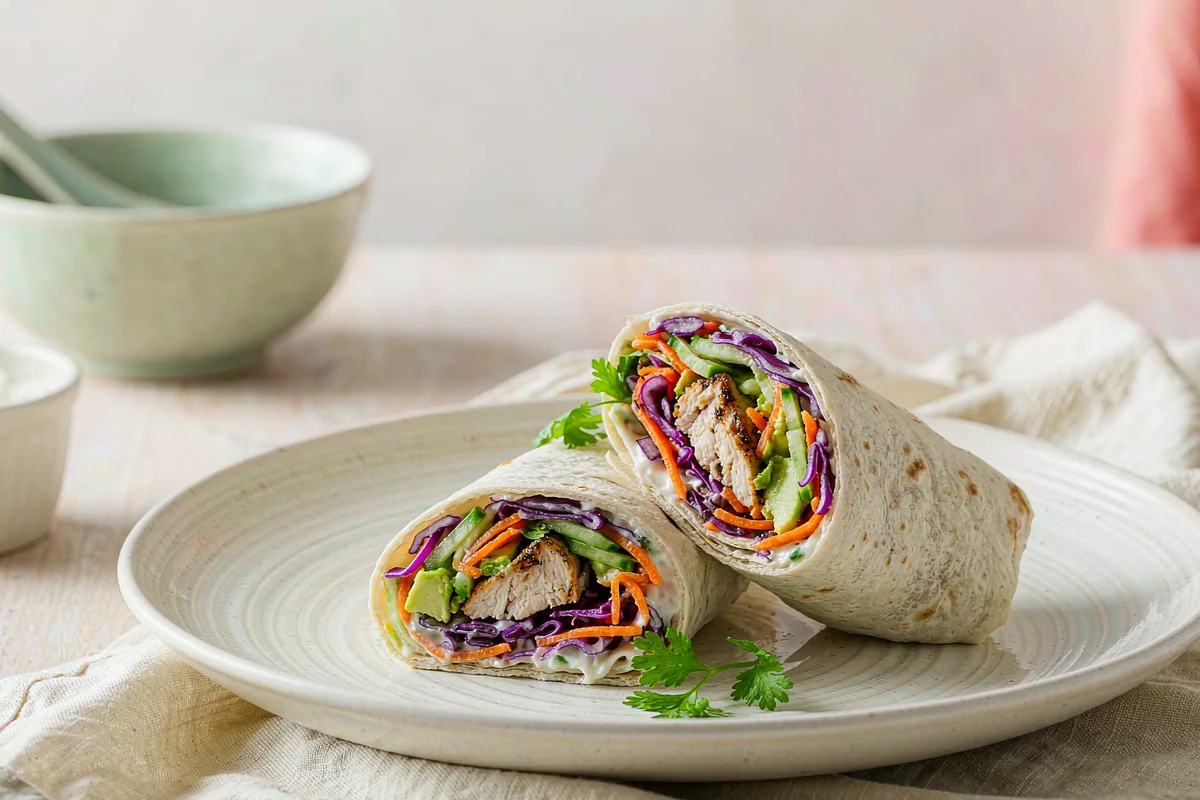
A sandwich is two slices of bread plus mayo plus cheese — and suddenly lunch is 700 kcal of soft carbs. A wrap should fix that: one thin sheet, rolled tight, portable. But most "healthy wraps" blow it by using a jumbo spinach tortilla and doubling the cheese, so they end up heavier than the sandwich they replaced. The trick isn't the wrap itself — it's size and filling. Below: why a wrap can win, three builds that actually hold you (all on our menu), and how to keep any wrap genuinely light.
Wrap vs sandwich — why a wrap wins (when done right)
- Fewer calories per sheet. A single thin tortilla runs lighter than two slices of bread — less energy, more portable.
- The catch is size. A "large" 300-kcal spinach wrap with double cheese easily beats a sandwich. The sheet, not the shape, is what matters.
- The fix. One thin wrap (or a lettuce leaf) + lean protein + vegetables. That's the version that earns its "healthy" label.
Three builds that actually hold you
All three are on our menu — order them instead of assembling:
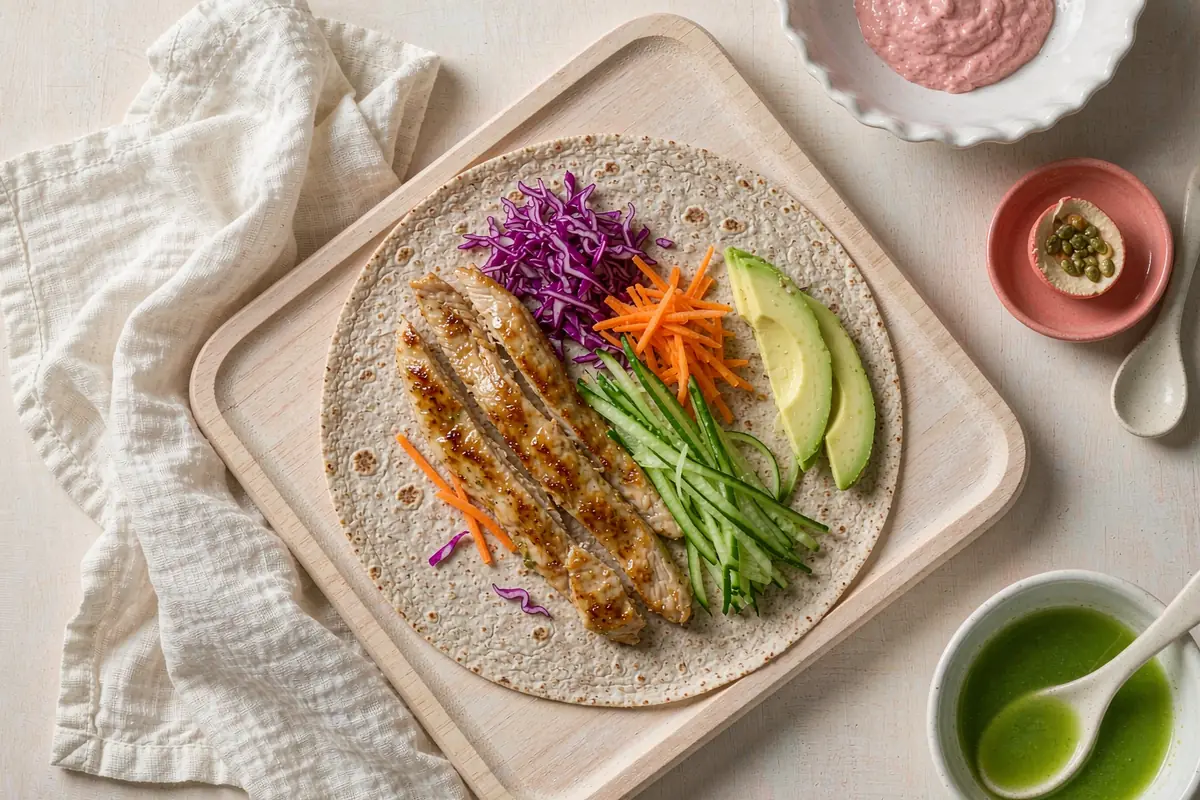
Step 1 — Fill the lower third only, in bands. Anything past the halfway line squeezes out when you roll.
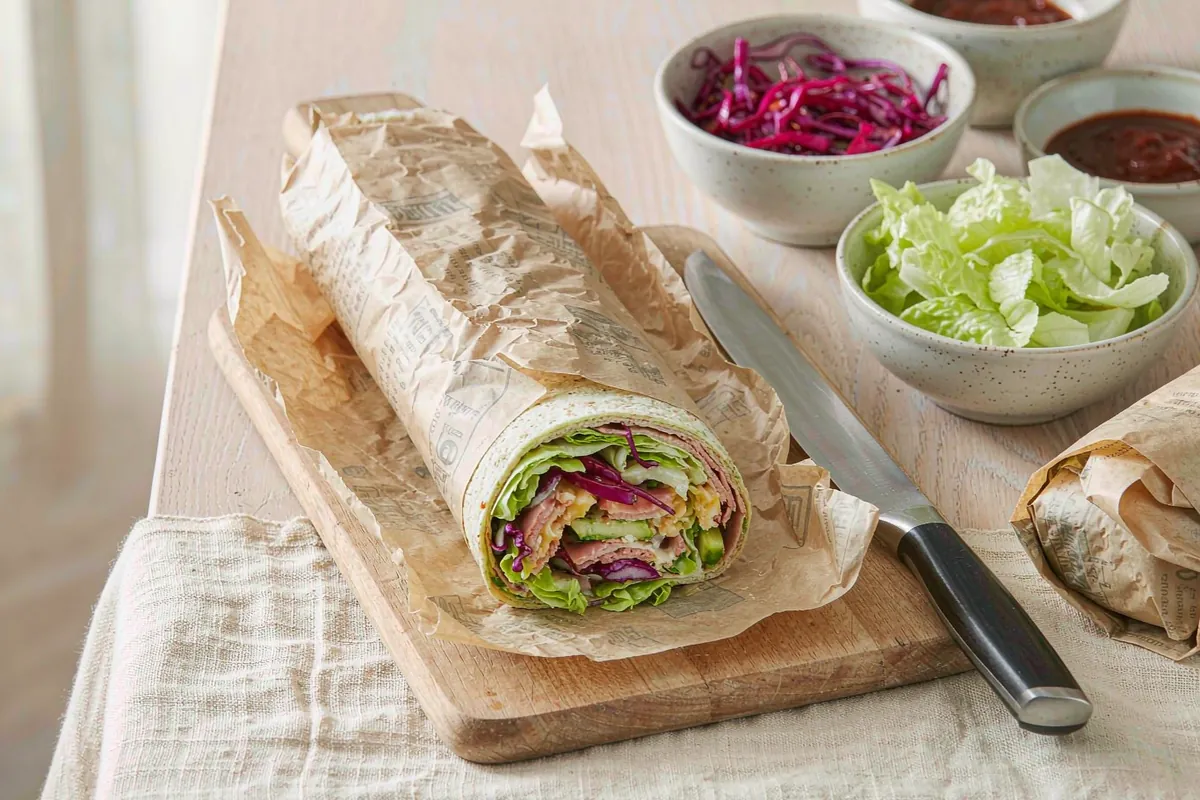
Step 2 — Roll tight, tuck the sides, then rest it seam-down for a minute before cutting.
Grilled Chicken Power Wrap
The training-day standard: grilled chicken, vegetables and a light dressing in one portable roll. High protein, easy to eat on the move. Grilled Chicken Power Wrap →
Shrimp Avocado Wrap
Shrimp plus avocado and greens — omega-3 and good fat that keep you full without the crash. The lighter, brighter option. Shrimp Avocado Wrap →
Avocado Egg Roll
Protein and avocado in a clean, light roll — the one we send when you want something handheld but not heavy. Avocado Egg Roll →
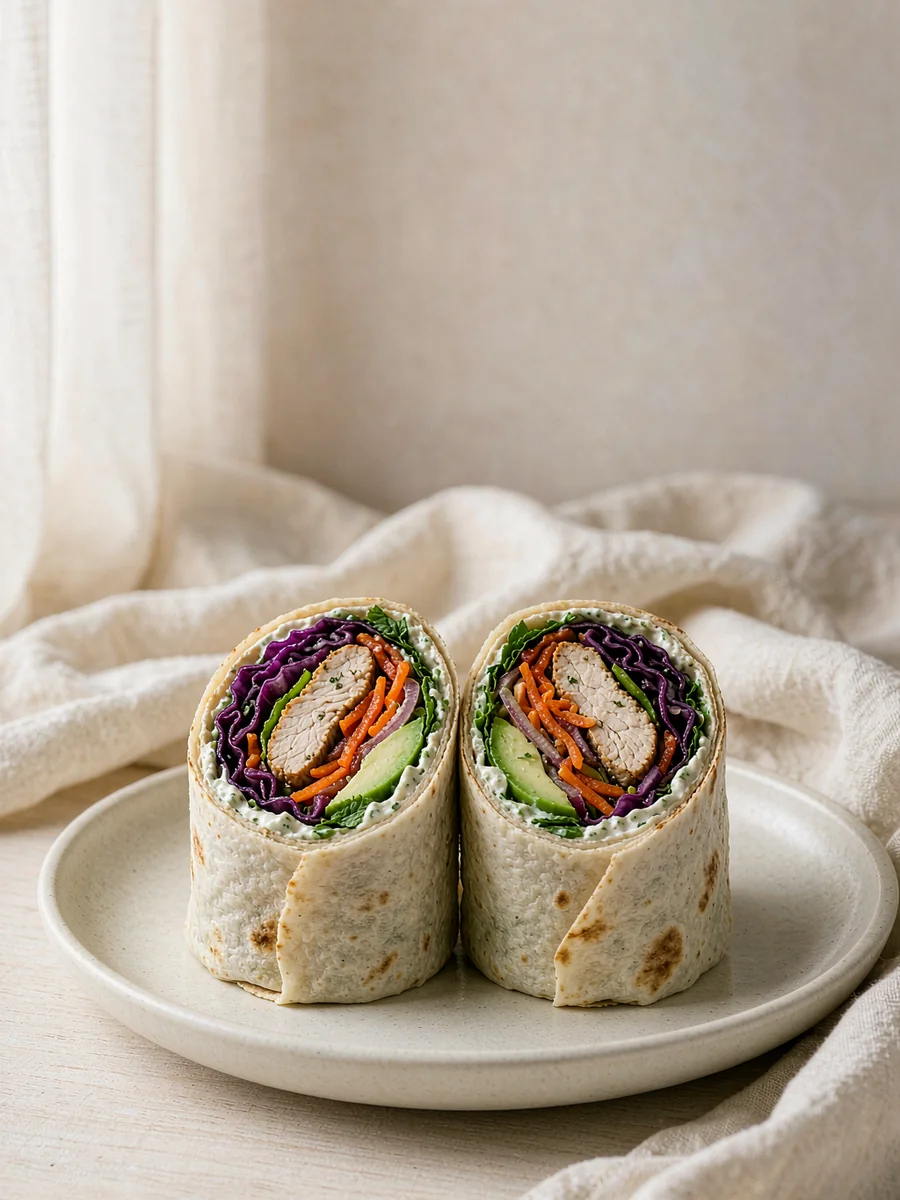
Three builds that hold: chicken and slaw, shrimp and avocado, avocado and egg.
How to keep a wrap light
- One sheet, not two. Or swap half the tortilla for a big lettuce leaf — same handheld feel, far fewer calories.
- Avocado or Greek-yogurt mash instead of mayo. You keep the creaminess, drop the processed fat and sugar.
- Pile the vegetables. They're the volume that makes a small wrap feel like a full meal.
- Sauce on the side. A drizzle you add at eating time beats a pre-sauced, soggy roll.
When a wrap beats a bowl
A wrap travels — commuting, the gym bag, a desk with no plate. Pre-training, a wrap with a little more carb (the tortilla) is an easier pre-workout option than a dense grain bowl. Otherwise our bowls win on volume-per-calorie. Both have a place; pick by the moment.
What makes a wrap light or heavy
A wrap is only as light as its tortilla and its spread. A ten-inch flour tortilla is about 140 kcal on its own, and a large flavoured one can be 200. The filling is usually the easy part, because lean protein and raw vegetables cost very little. So the two places to look are the bread and whatever creamy thing is smeared on it: a tablespoon of mayonnaise is around 90 kcal, a tablespoon of yoghurt-based sauce closer to 25.
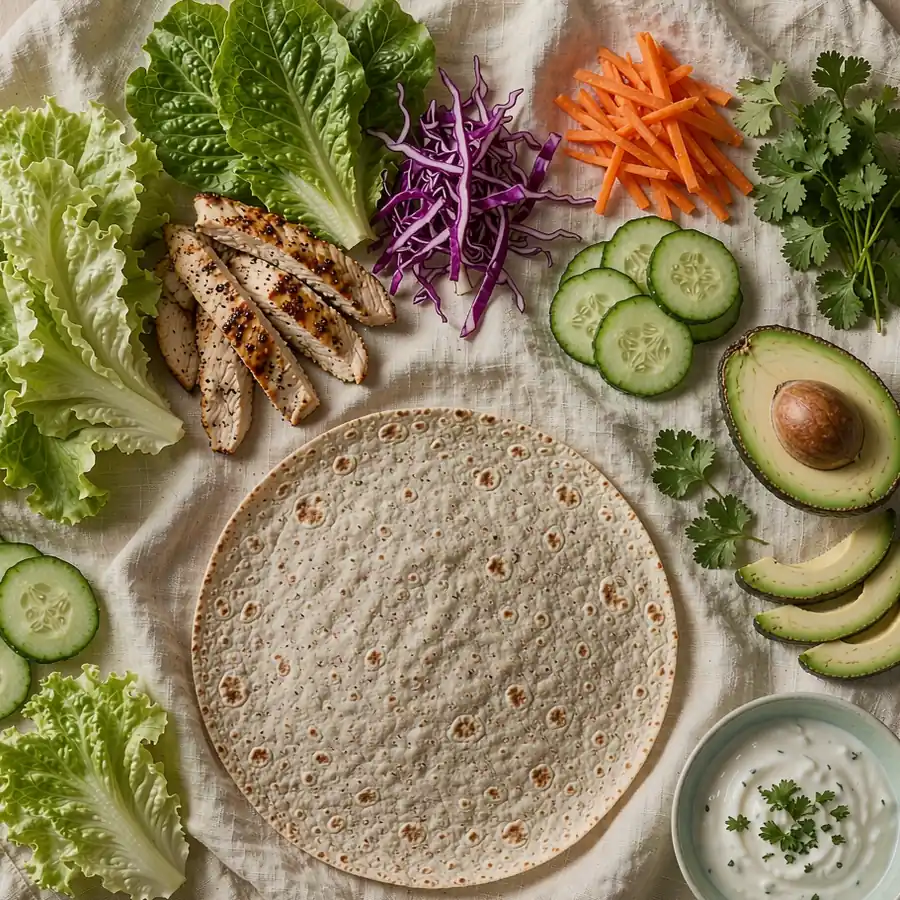
The formula: one thin sheet, a lean protein, a crunchy slaw, something creamy, and an acid.
The formula we use
- Half the wrap is vegetables. Shredded cabbage, cucumber, carrot and herbs give volume for almost nothing.
- One protein, palm-sized. Grilled chicken, prawns, tofu or egg — 20–25 g of protein is what makes it hold.
- Sauce in a thin layer. Something sharp and thin, like yoghurt and lime or vinegar and chilli, rather than thick and sweet.
- Roll tight, cut on the diagonal. A loose wrap falls apart, and a wrap that falls apart gets eaten with a fork and a lot more sauce.
Three fillings that work cold
Shredded chicken with cucumber, coriander and a yoghurt-lime dressing. Prawns with mango, mint and rice vinegar. Firm tofu with pickled carrot, cabbage and hoisin thinned with water. All three sit happily in a lunch box for four hours, which is more than can be said for anything with lettuce in it.
This sits inside the lighter half of the year — healthy Chinese dishes and healthy sauces are collected in Seasonal Light Meals for Fat Loss.
A high-protein lunch prep for work
Wraps are the desk lunch that never spills. Build a high-protein lunch prep for work around a whole-grain wrap, a lean protein and crunchy vegetables, then roll and refrigerate — grab one on the way out and the 3pm slump loses its edge.
Why a wrap can be high-protein and low-calorie
A wrap turns lean protein, high-fiber vegetables, and a controlled carb base into a meal that travels. The trick is the build: a high-fiber wrap, 100–120 g lean protein, and 2 cups of vegetables keep calories low while protein and fiber do the satiety work. That is the logic behind high-fiber low-calorie meal prep — and these double as 5-ingredient low-calorie meals or a 15-minute low-calorie lunch meal prep on rushed days.
See also our low-calorie lunches and office meal prep for the batch-cook backbone.
Roll a high-protein wrap in 2 minutes, step by step
- Lay a high-fiber wrap flat; spread 1 tbsp yogurt sauce.
- Add 100–120 g lean protein (chicken, tuna, or tofu).
- Layer 2 cups of vegetables (spinach, pepper, cucumber).
- Roll tight; slice in half; pack cold.
Nutrition at a glance
| Wrap build | Calories | Protein (g) | Fiber (g) | Fat (g) |
|---|---|---|---|---|
| Chicken & spinach | 350 | 34 | 7 | 9 |
| Tuna & veg | 320 | 30 | 6 | 7 |
| Tofu & pepper | 300 | 22 | 8 | 8 |
Approximate values per wrap; guidance only, not medical or nutrition advice.
Smart swaps that keep a wrap light
| Swap | Instead of | Try | Why it helps |
|---|---|---|---|
| Base | White flour wrap | Whole-grain or lettuce | More fiber, fewer empty carbs |
| Spread | Mayonnaise | Yogurt or hummus | Cuts fat, adds protein |
| Fill | Deli meat | Roasted chicken/tofu | Less sodium, more protein |
| Side | Chips | Cherry tomatoes | Fiber instead of fried fat |
A wrap stays light only if the base and spread are right.
FAQ
Are wraps healthier than bread?
Only if the wrap is smaller than two slices of bread and you skip the heavy fillings. A jumbo 300-calorie spinach wrap with double cheese easily beats a sandwich. Use one thin tortilla or a lettuce wrap and load the vegetables.
What's the best high-protein wrap filling?
Grilled chicken or shrimp with avocado and vegetables clears 30g of protein at a reasonable calorie count — and it actually holds you for hours because of the fat-fiber-protein combo, not just the protein number.
Can wraps be low calorie?
Yes. Swap the tortilla for a large lettuce leaf or a thin 80–100 kcal wrap, use mashed avocado instead of mayo, and pile on the vegetables. That gets you a satisfying wrap under roughly 350 kcal.
Are wraps healthier than sandwiches?
Not automatically. A wrap and a sandwich can carry the same filling and the same calories; what changes is the bread. A thin tortilla is often lighter than two slices of soft white bread, but a large flavoured wrap can be heavier.
How many calories should a wrap have?
For a light lunch, 350–450 kcal is a workable band. Below that it rarely holds until dinner unless the protein is high, and above it the wrap stops being the lighter option.