Build a Balanced Bowl: The Oriental Bite Formula
By Oriental Bite Kitchen Team · Updated 2026-09-02
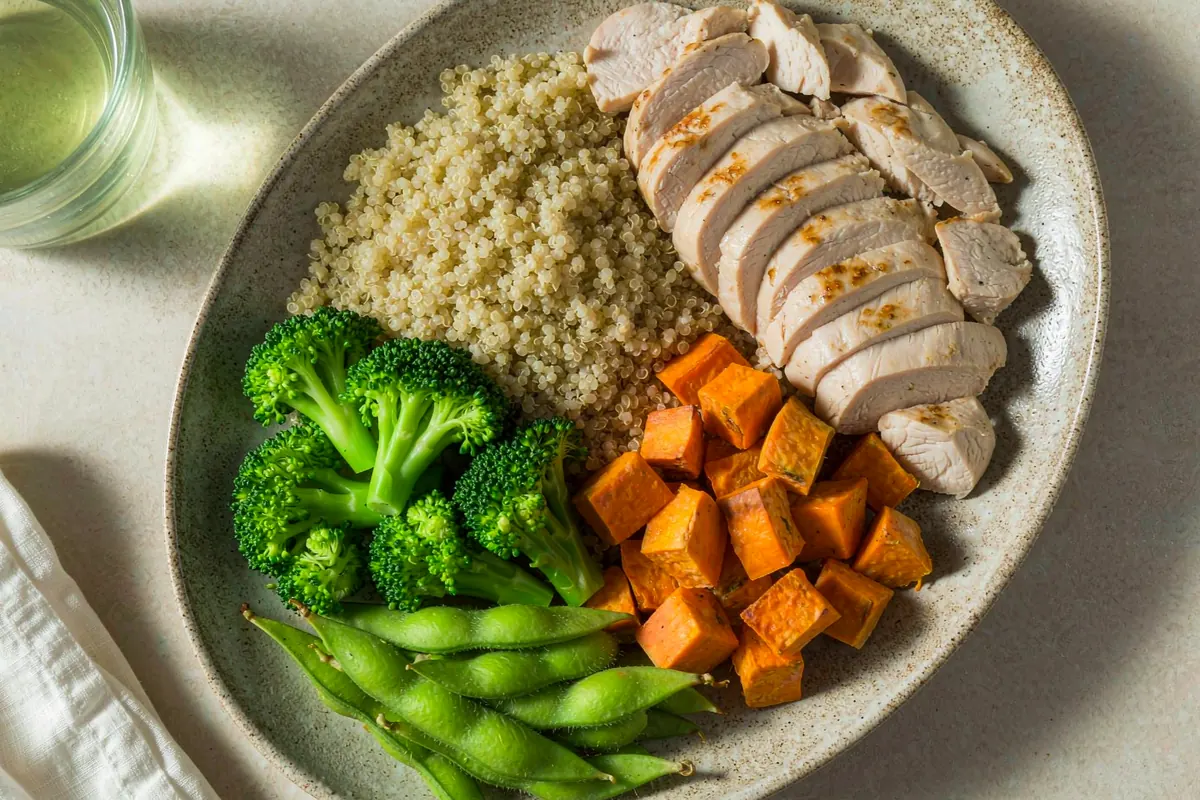
A bowl is the easiest healthy meal to assemble and the easiest to get wrong. Pile in greens, a protein and a sauce and you get something that tastes like a salad someone forgot to finish. The difference is architecture. Our four-part formula scales from a five-minute lunch to a Sunday meal-prep: grain + protein + herb + crunch.
The four-part formula
Slow-carb base sets the volume
Start with a fiber-rich grain that holds its shape when reheated: quinoa, millet, farro or soba. This is the floor of the bowl — body, steady energy, and a longer hold than white rice.
The anchor that kills hunger
Aim for 25–35g of protein per bowl — the range that holds hunger for three to four hours. Chicken, salmon, shrimp, tofu or egg all work. The Chicken Quinoa Energy Bowl and the Salmon Quinoa Bowl are built to this spec.
The guochao difference
Where we diverge from a Western salad bar. Instead of raw lettuce we layer in food-grade time-honored herbs — goji, poria, dendrobium, yuzhu — plants Chinese cooking treats as everyday food, not medicine. They add aromas a plain green cannot. The Herbal Tofu Bowl is built entirely around this layer.
Texture that signals "done"
A bowl without contrast feels unfinished, so you keep snacking. A small crunch element — toasted seeds, crushed peanuts, farro, or crisped shallot — gives the meal a clear ending. The Five-Spice Turkey Farro Bowl uses farro for exactly this.
Put it together: a sample build
A reliable weekday bowl looks like this:
- 1 cup millet or quinoa (base) — about 220 kcal, 5g fiber.
- 120–150g grilled chicken or salmon (protein) — 25–32g protein.
- A palm of steamed herb mix — goji, poria, shredded yam (wellness layer).
- 1 tablespoon toasted seeds or farro (crunch) — texture without frying.
- Drizzle: five-spice soy or Sichuan pepper dressing, not a creamy sauce.
That is roughly 450–520 kcal with 28–34g protein — the same bracket as our menu bowls.
If you want the definitions this rests on, Start Here: Oriental Light Meals, Explained covers them, alongside balanced Buddha bowls and air-fryer Chinese food.
FAQ
What is the formula for a balanced meal bowl?
Four parts, in this order: a slow-carb grain base (quinoa, millet, farro), a real protein anchor (20–35g), a time-honored herb or vegetable layer, and a crunch element. The grain sets the volume, the protein sets the fullness, and the crunch finishes the meal.
How much protein should be in a meal-prep bowl?
For most active adults, 25–35g per bowl is the sweet spot — roughly one chicken breast, a fillet of salmon, or a cup and a half of firm tofu plus a boiled egg.
Why add herbs to a bowl instead of just vegetables?
In the guochao kitchen, herb means food-grade time-honored plants like goji, poria, dendrobium or yuzhu — ingredients Western cooking treats as tea but Chinese cooking treats as food.
Can I use this formula for meal prep?
Yes, and it holds up better than salad in a jar. Cook the grain and protein in bulk, keep the herb layer lightly steamed, and add the crunch right before eating so it stays crisp.
Build yours, or let us
Every bowl on the menu already follows the four-part formula.
Explore the Menu