Why We Cook with time-honored Herbs
By Oriental Bite Kitchen Team · Updated 2026-09-02
If you grew up with a Western grocery aisle, "time-honored herb" sounds like something in a pill bottle. In a Chinese kitchen it means the opposite: plants you simmer into dinner. There's a long tradition — yaoshanfood as gentle medicine — where ingredients like dendrobium, yuzhu and poria are cooked into congee, soup and tea not to cure illness but to keep the body steady through ordinary days. That's the layer we add to our light meals: wellness that tastes like food, not a supplement. Here's what we use and why it earns a place in a bowl.
What "time-honored herb" really means here
These plants sit in a grey zone between vegetable and tonic. In Chinese food culture they are not medicine you take when you're sick — they're everyday ingredients you eat for slow, cumulative benefit. Goji in your porridge, poria in your soup, tremella in your dessert. Western wellness rediscovered this idea recently as "functional foods"; the kitchen version has been around for a thousand years. The key word is gentle — these are mild foods, not extracts, and they're safe to eat daily for most people.
The herbs we actually cook with
We only use food-grade plants that taste like food first. Four show up most often on our menu:
Dendrobium Dendrobium
Faintly sweet, with a slippery, fine-green texture. Traditionally used to support hydration and a calm throat. We lead with it in the Dendrobium Water-Bamboo Bowl, where it pairs with crunchy water bamboo for contrast. It reads as a vegetable, not a tonic.
Yuzhu Yuzhu
Mild and starchy, somewhere between a root and a noodle. Used for steady, non-jittery energy — the anti-caffeine. The Yuzhu Asparagus Wellness Bowl builds on it alongside asparagus for a clean, savory light meal.
Poria Poria
Neutral-tasting and sponge-like; it takes on whatever it's cooked with. The go-to herb for calm digestion. Our Purple Potato Poria Yam Oat Porridge uses it as the quiet base note under sweet potato and yam.
Lotus Seed Lotus seed
Slightly bitter-sweet and firm, used in soothing, caffeine-free soups. The Yam Lily Lotus Seed Soup is our evening bowl — warm, soft, and built to close a day without a sugar crash.
Why this fits a light meal
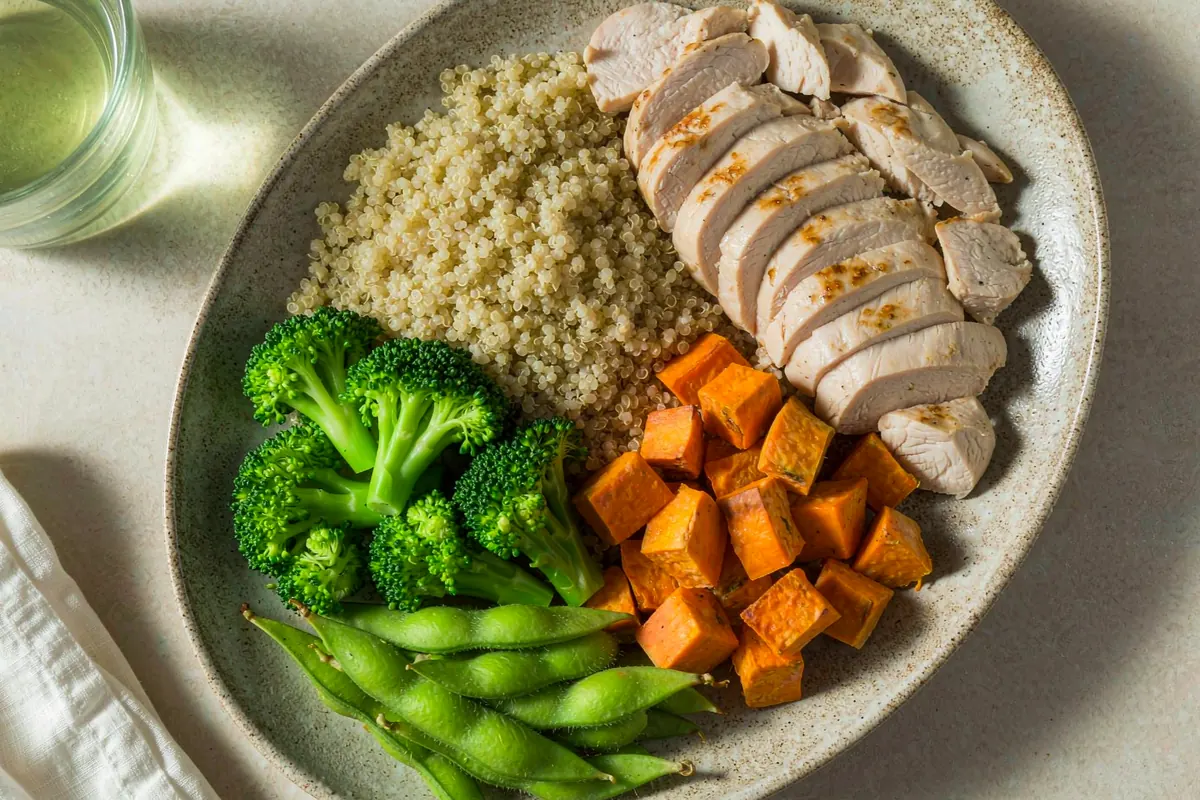
A modern light-meal problem is that "healthy" often means "bare" — grilled chicken and sad greens, then a 4pm crash and a snack raid. Herbs solve a different problem: they add depth and staying power without calories. Poria and yuzhu make a bowl feel nourishing rather than restrictive; lotus seed and tremella give a dessert-like finish with no refined sugar. The result is food you can eat daily without feeling like you're on a diet — which is the whole point of guochao light eating.
How we keep it honest
- Food-grade only. We never use strong botanicals that need a practitioner's prescription. If it isn't eaten daily in a normal East Asian home, it isn't in the kitchen.
- Cooked, not powdered. Herbs go in as whole or sliced ingredients you can see and taste — never hidden in a "wellness powder" with a mystery dose.
- Balanced, not overloaded. One or two herbs per bowl, enough to taste and to matter, never a time-honored pile that overwhelms the meal.
Alongside this, Chinese teas and herbal soups belong to the same ingredient set — the whole collection is mapped in Chinese Herbal Meals & Wellness Drinks.
FAQ
What does 'time-honored herb' mean in Chinese cooking?
It refers to a group of plants — dendrobium, yuzhu, poria, lotus seed, goji, tremella — that sit in a grey zone between vegetable and tonic. In Chinese food culture they're not 'medicine' you take when sick; they're everyday ingredients you simmer into congee, soup or tea for gentle, cumulative wellness. Think of them as the original functional foods, centuries before the term existed.
Are these herbs safe to eat every day?
The food-grade ones we use are mild and eaten daily across East Asia — in congee, soups and desserts — without issue for most people. They're not concentrated extracts or prescription herbs. That said, if you're pregnant, on medication, or managing a specific condition, treat them like any new food and check with your doctor. We never use strong botanicals that require a practitioner.
Do time-honored herbs actually taste good?
The ones we cook with are chosen because they taste like food first. Dendrobium is faintly sweet and slippery like a fine green; yuzhu is mild and starchy; poria is neutral and takes on whatever it's cooked with; tremella turns into a soft, pearlescent jelly. None of them taste like cough syrup. They add texture and a clean aftertaste, not bitterness.
Which Oriental Bite bowls use time-honored herbs?
Most of our wellness line. The Dendrobium Water-Bamboo Bowl leads with dendrobium, the Yuzhu Asparagus Wellness Bowl uses yuzhu for steady energy, the Purple Potato Poria Yam Oat Porridge builds on poria for calm digestion, and the Yam Lily Lotus Seed Soup uses lotus seed for a soothing, caffeine-free finish. Each one is a full meal, not a tonic shot.