Back to Dishes
Recipe

How to Make Noodles
from Scratch

No machine, no mystery — just flour, water and a little patience. Follow our guochao-style method to roll silky, springy noodles you'll be proud of, then dress them any way you like.

Prep 20 min
Cook 5 min
Easy
Homemade noodles in a light Eastern-style bowl, a low-calorie staple Guochao Kitchen

What You'll Need

A short, honest shopping list — pantry staples you probably already have. Makes about 2 servings.

🌾
Bread flour
300 g
💧
Warm water
120 ml
🧂
Salt
1/2 tsp
🥚
Egg (optional)
1, for richness
🫒
Sesame oil
1 tsp, in dough
🌾
Cornstarch
to dust
🍜
Scallions
2, sliced
🥢
Soy & vinegar
to taste

Equipment & timing

No machine and no special kit. Get these out before you start:

  • Large bowl — for mixing the dough.
  • Chopsticks or a fork — to stir the water in gradually.
  • Work surface or board — for kneading and rolling.
  • Cling film or a damp towel — to cover the dough while it rests.
  • Rolling pin — any wooden one will do.
  • Knife — for cutting the ribbons.
  • Large pot — plenty of boiling water.

Timing: 20 min prep, 5 min cooking, 30 min resting — about 55 min in total.

Make It Yourself

Step by Step

Six simple moves from a shaggy dough to a bowl of springy noodles.

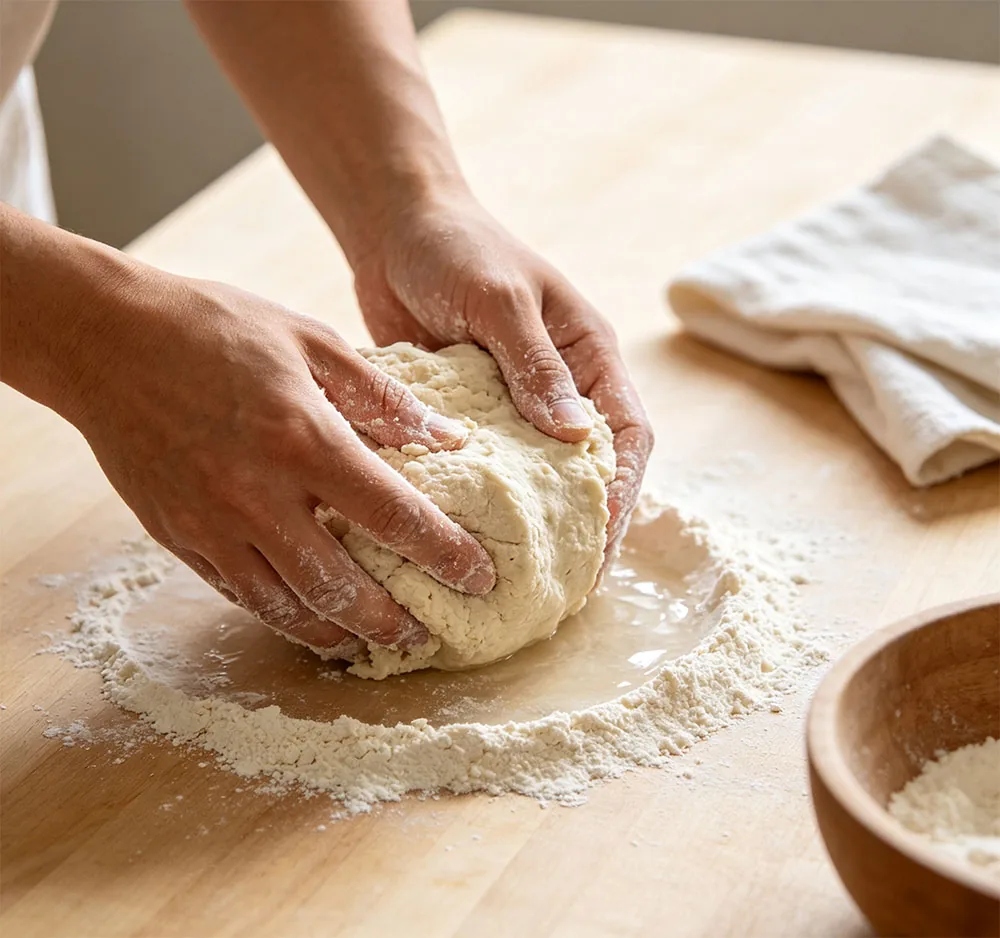
Step 1: mixing bread flour and warm water into a shaggy homemade noodle dough
1

Mix the dough

Combine flour, salt and sesame oil. Slowly pour in the warm water (and egg, if using) while stirring with chopsticks until a shaggy, rough mass forms. Tip onto a board.

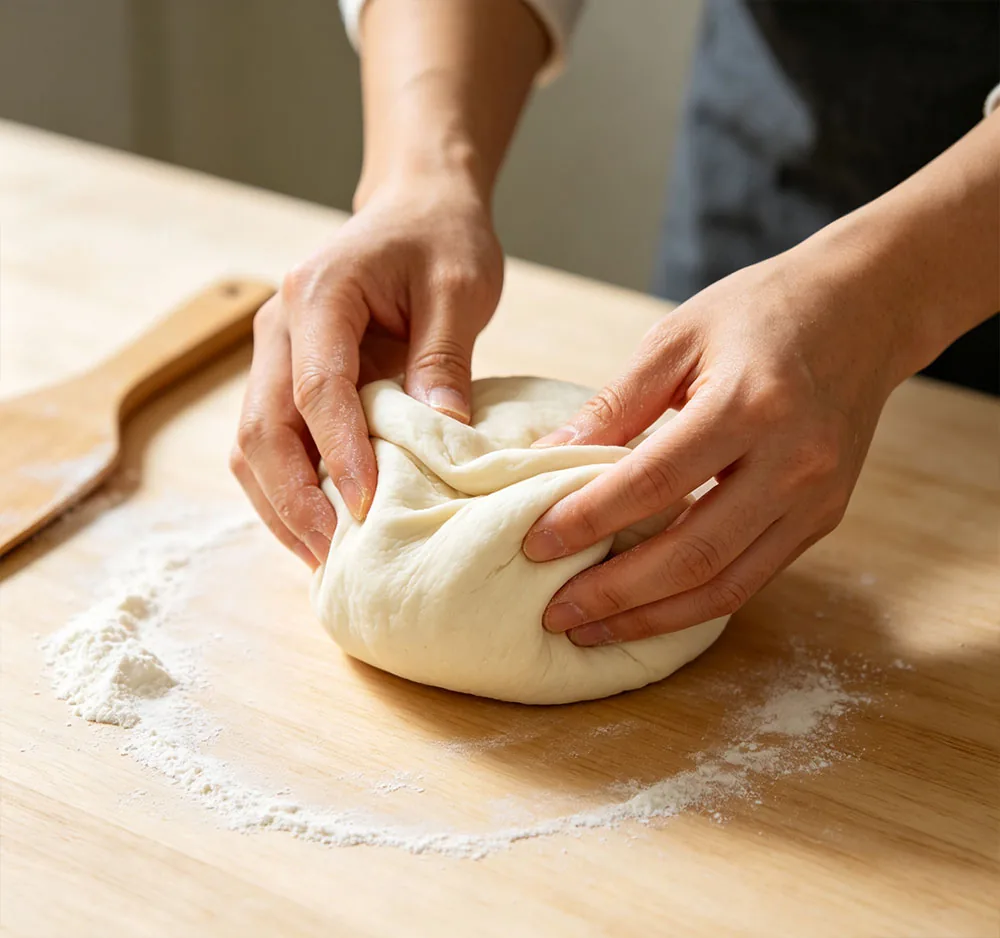
Step 2: kneading homemade noodle dough until smooth and springy
2

Knead until smooth

Knead 8–10 minutes until the dough is smooth and springs back when poked. This develops the gluten that gives noodles their bounce.

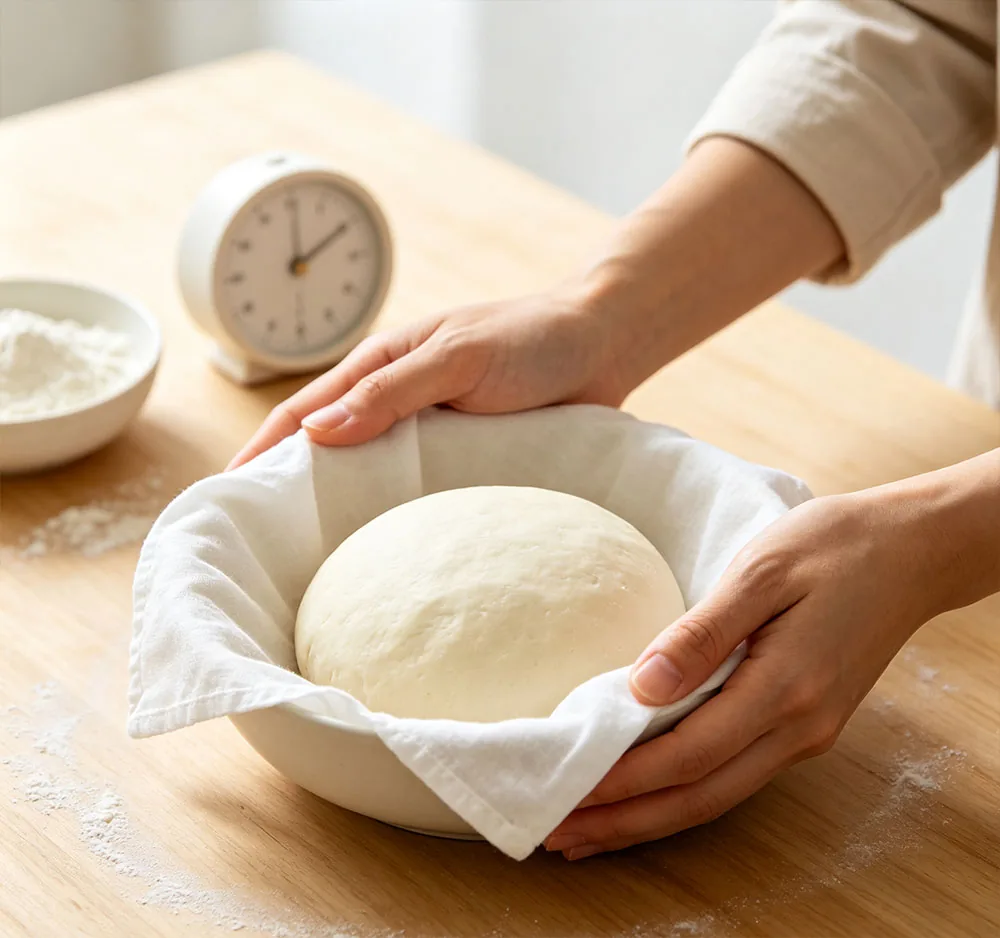
Step 3: resting the covered noodle dough so the gluten relaxes
3

Rest, covered

Wrap in cling film or a damp towel and rest 30 minutes at room temperature. A rested dough is relaxed and easy to roll — don't skip this.

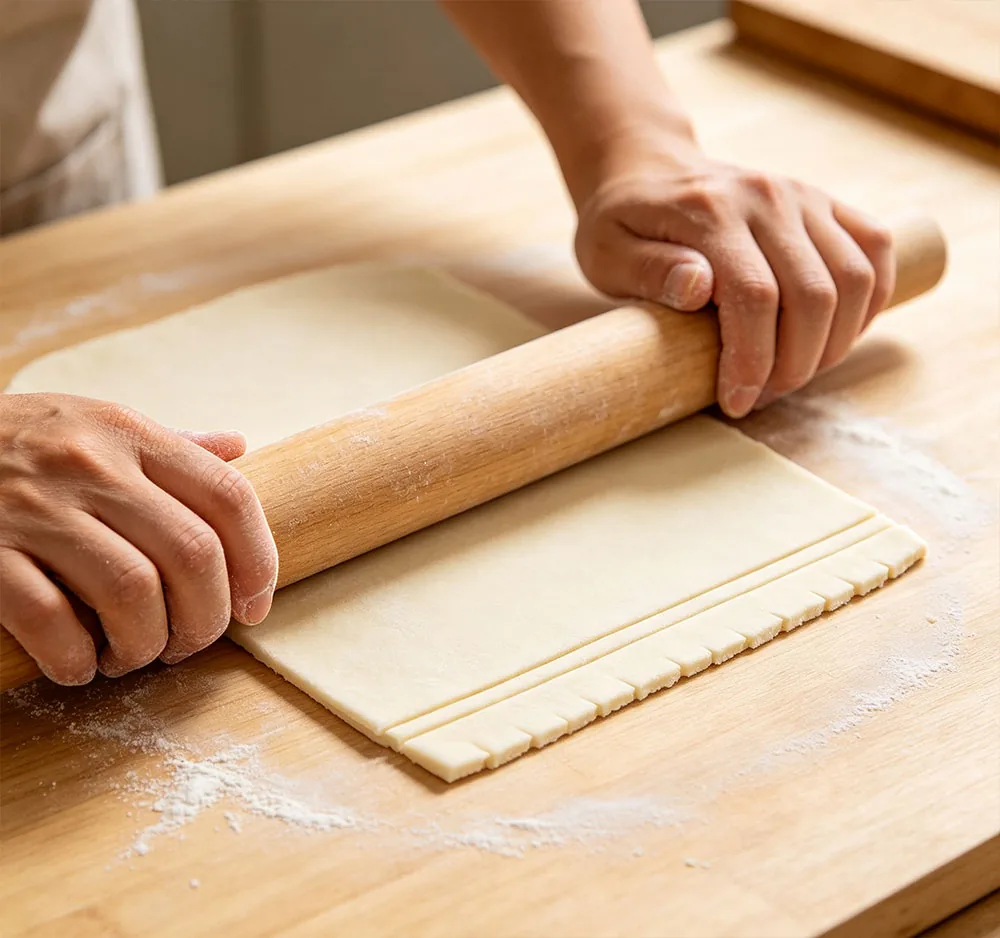
Step 4: rolling noodle dough into a thin sheet with a wooden rolling pin
4

Roll thin & dust

Roll the dough into a thin sheet (about 2 mm). Dust both sides with cornstarch so the layers won't stick when you fold.

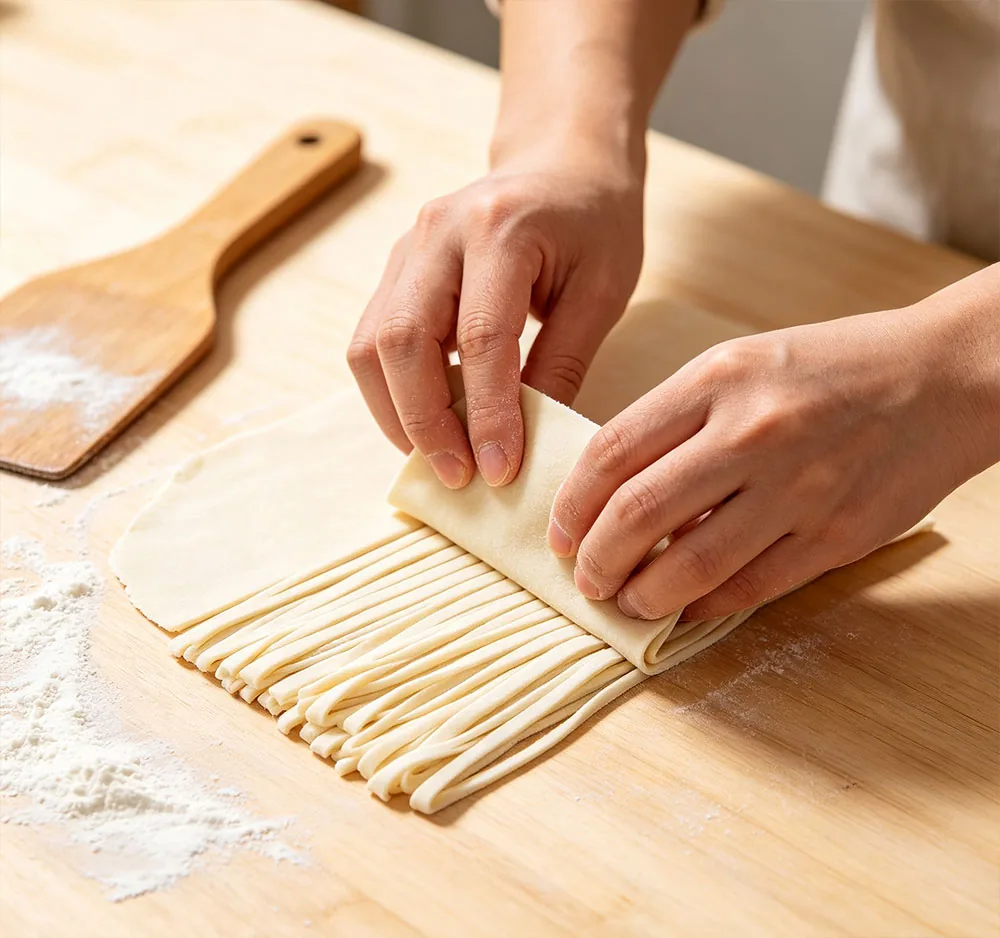
Step 5: folding and cutting dough into fresh handmade noodle ribbons
5

Fold & cut

Loosely fold the sheet like a fan, then slice into ribbons of your preferred width — thick for knife-cut, thin for soup. Unfurl and toss with a little cornstarch.

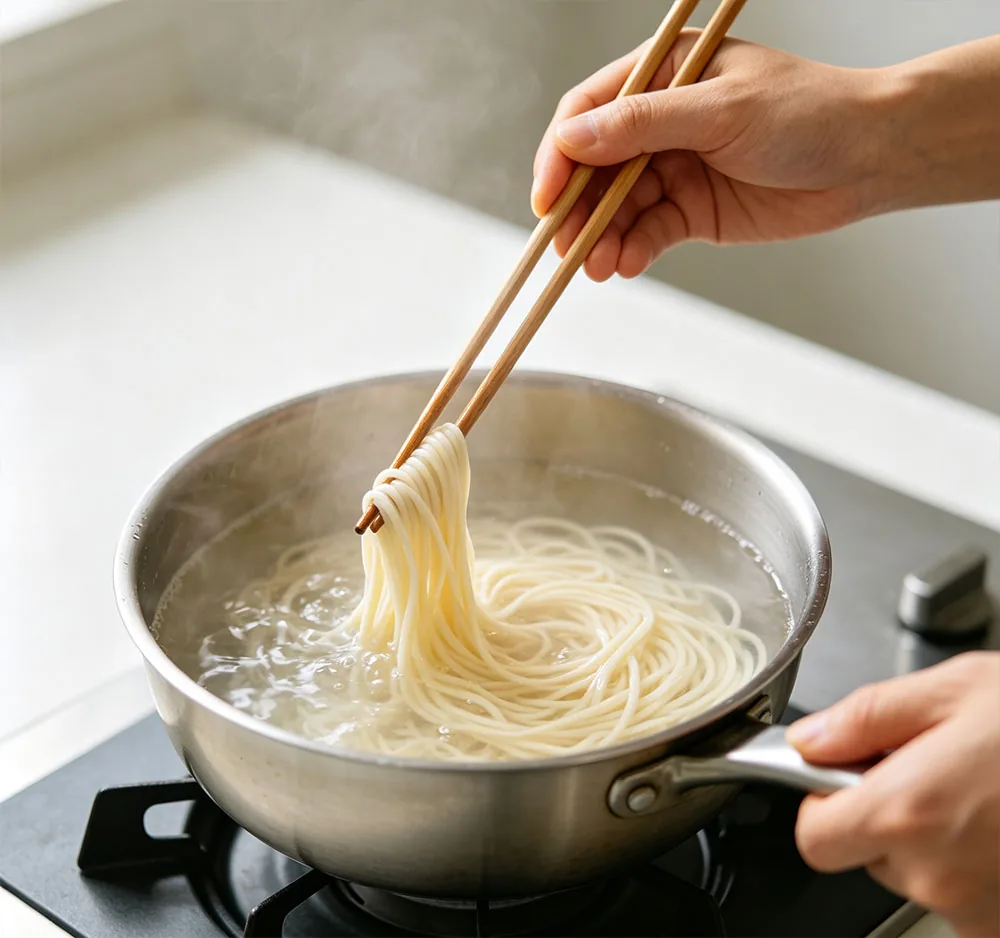
Step 6: boiling fresh homemade noodles in a pot of water
6

Boil & serve

Drop into boiling water, stir once, and cook 2–3 minutes until they float and turn silky. Shock in cold water for extra spring, then dress with soy, vinegar, scallions and a drizzle of sesame oil.

Chef's Tips

Small details that make the difference between "fine" and "wow".

Hydration matters

Aim for ~40% water by flour weight. Too dry = crumbly; too wet = sticky. Adjust a teaspoon at a time.

Rest, really

The 30-minute rest is where the magic happens. Rushed dough fights back when you roll it.

Dust, don't drown

Cornstarch beats flour for preventing sticks and keeps the cut edges clean. A little goes a long way.

Ratios & troubleshooting

Most noodle failures come down to two things: hydration and resting. Here are the numbers we use.

Everyday wheat noodles

100g flour : 42–45ml water, plus a pinch of salt. Rest 30 minutes before rolling.

Chewy, springy dough

Drop hydration to 38ml and rest 60 minutes. Slower gluten development gives the bounce.

Buckwheat / soba style

Mix buckwheat with wheat flour and keep hydration low — buckwheat has no gluten to hold it together.

If it goes wrong

Dough tears when rolling

Too dry, or not rested. Cover it and wait 15 more minutes before trying again.

Noodles stick together

Dust generously with flour as you cut, and drop them straight into boiling water.

They turn mushy

Cook them in plenty of water, taste at 90 seconds, and cool in cold water if serving later.

Dough keeps shrinking back

That is elasticity from under-resting. Cover the dough and give it 20–30 more minutes; relaxed gluten rolls thin without fighting you.

Dough turns sticky or gray

Sticky means hydration crept up — dust the surface, don’t work in dry lumps. A faint gray shade is normal once buckwheat-heavy dough sits; cover it with a damp cloth while you roll.

Keeping it light

Serve with a light broth or a measured sauce rather than a heavy oil dressing — see our light sauces.

Short on time? Our cold soba noodle bowl is the ready-made version of this page, our lazy fat-loss meals cover the days you barely want to cook, and the full menu or our signature dishes have more.

Eastern Staples

Pick your noodle

Not all noodles are the same. In the Eastern larder, the base grain sets the texture, the fibre and the feel of the bowl.

Wheat noodles

The everyday choice — high in gluten, springy and forgiving. Best for knife-cut and soup noodles. In traditional food culture wheat is seen as a steady, warming staple for daily eating.

Buckwheat (soba)

Earthy, nutty and lower on the glycemic index. Buckwheat has no gluten, so mix it with wheat flour (about 30:70) to hold together. Traditionally valued in Eastern food culture as a filling, lighter grain.

Whole-wheat

More fibre and a denser bite. A good swap when you want the bowl to keep you full longer. Toast the flour lightly first for a gentler taste.

Mung-bean / glass noodles

Made from mung-bean starch, near-translucent and very light. They soak up broth beautifully and add almost no fat — a classic in light Eastern soups and hot pots.

From Pot to Bowl

Five ways to serve them

Fresh noodles ask for a calm hand, not a heavy one. Five bowls we keep coming back to.

Tossed, barely dressed

Toss while warm with a spoon of light sauce, a scatter of scallions and nothing else. When the noodle is this fresh, restraint is the point.

In a gentle soup

Ladle hot broth straight over the drained noodles. Our light soups show how little a comforting bowl asks of you.

Chilled, soba-style

Rinse cold, dip, slurp. That is the logic behind our ready-made cold soba noodle bowl.

Under a protein pile

Torn chicken, a jammy egg or edamame on top — the same move as our high-protein meal prep.

Lunchbox-ready

Cook once, chill, re-toss at noon — the habit behind our twelve low-calorie lunches.

Light Living

Why handmade noodles suit a fat-loss plan

A bowl you build yourself is easy to keep light — you control the starch, the sauce and the plate.

You set the portion

Aim for one fist of noodles per bowl. Homemade means no hidden oil or extra starch folded in at the factory — the same low-oil approach we cook by.

Dress, don't drown

A measured drizzle of light sauce beats a heavy oil dressing — the single biggest calorie lever on the plate.

Load the vegetables

Bulk the bowl with scallions, greens and lean protein so the noodles are the side, not the whole story.

Working to a daily number? Our light meal plans set the portions for you.

Food as Wellness

A note from the Eastern table

In traditional Eastern food culture, the grain you choose is part of the meal's character, not just its carbs. Wheat is regarded as a steady, warming everyday staple; buckwheat is traditionally used to feel light and satisfied; mung-bean is seen as cooling and gentle. These are traditional food views passed down in culinary culture — they are not medical claims, and they don't replace advice from a qualified professional.

Eat for balance: a fist of noodles, a palm of protein, two palms of vegetables, and a light hand with the sauce. For the food-as-wellness side of the pantry, see our herbal & wellness guides.

Make Once, Eat Twice

Storing, freezing and reheating

Fresh noodles are best the same day, but they keep well if you treat them right.

In the fridge

Dust the nests generously with cornstarch, cover loosely and refrigerate up to two days. Keep them in loose nests so air can circulate.

In the freezer

Freeze portions flat on a tray first, then bag them for up to two months. Cook straight from frozen, adding about thirty extra seconds.

Reheating without mush

Skip the microwave. Drop the noodles into boiling water for twenty to thirty seconds to bring back the bounce, then dress and serve at once.

Diet & health note: Nutrition figures are estimates for the plain noodles in this recipe and will change with your flour, toppings and sauce. Nothing here is medical advice — if you are managing a health condition or following a prescribed diet, please follow the guidance of a qualified professional.

Frequently asked

How long should noodle dough rest?

At least 30 minutes at room temperature. For a chewier, springier noodle, rest 60 minutes — the gluten relaxes and the dough rolls out far more easily.

Can I make noodles without eggs?

Yes. The egg is optional and only adds richness, not structure. A flour-and-water dough makes perfectly good noodles; just keep hydration around 40% by flour weight.

Why do my noodles stick together?

Dust the sheet with cornstarch (not wheat flour) as you cut, keep the ribbons loose, and drop them straight into plenty of boiling water while stirring once.

Are buckwheat soba noodles good for a lighter diet?

Buckwheat (soba) is traditionally valued in Eastern food culture for being filling and lower on the glycemic index than wheat. It is a sensible swap in a balanced light-meal plan, though it has no gluten, so mix it with wheat flour to hold together. This is a traditional food view, not medical advice.

How do I keep homemade noodles low in calories?

Serve them in a light broth or with a measured drizzle of sauce rather than a heavy oil dressing, load up on vegetables, and keep portions to one fist of noodles per bowl.

Loved making them? Try ours.

Short on time? Our chefs hand-pull every bowl daily — high-protein, low-oil, full of guochao character.