Kung Fu Meal Plan
Fuel your training the Oriental way
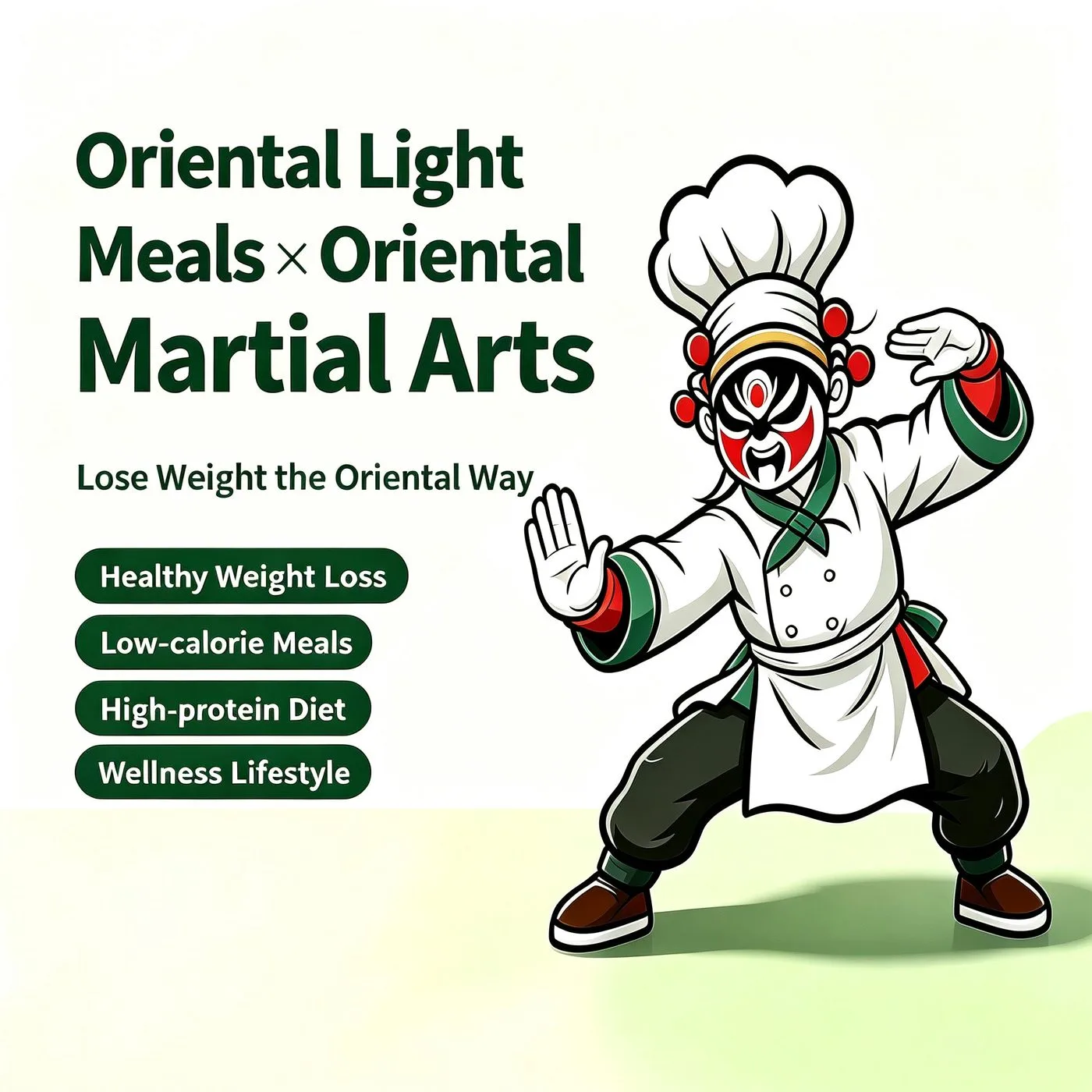
We fold the martial spirit — essence, energy, focus — into light eating: low-calorie, high-protein meals paired with traditional wellness wisdom, so lighter living becomes a mindful practice, not a dull numbers game. Every plate lands like a form: precise, powerful, controlled.
Martial arts train inside and out; so do our light meals — light on the outside, strong within. From ingredient choice to cooking method, traditional wellness wisdom shapes every step.
Guochao Spirit
Like a precise stance, every meal's calories, protein and carbs are calculated so the nutrition ratio is sound and scientific.
Inspired by TCM's energy-balance idea, low-GI staples with quality protein keep energy steady all day and avoid blood-sugar spikes.
Like meditation in training, we encourage slow, mindful eating so the body hears its fullness cue and naturally controls portions.
No quick fixes — we build habits you can keep, because like kung fu, healthy lighter living is won by steady, daily practice.
Most plans fail on week three. This one is built to still make sense on a tired Tuesday night — a rotating set of dishes tuned for strength, not just a single heroic dinner.
We measure success in weeks kept, not days started. This is the meal that stays.
A dish built for the moments your body asks for clean fuel
Pre-planned so clean eating survives a packed schedule.
Macro-balanced around harder training weeks.
Flexible enough to keep for months, not days.
Timing matters as much as macros. This is the eating rhythm we build around a training week.
A low-GI carb plus a lean protein — a grain bowl with chicken or tofu. Enough fuel for a full form, light enough that you are not sluggish.
25–35g of protein to start recovery. This is the meal fighters most often skip — and the one that decides how tomorrow's session feels.
Keep protein steady and pull calories down slightly. Soups, congees and steamed greens — eating for balance rather than performance.
Slow, breath-led practice calls for light plant protein and easy digestion.
Close-range speed work, refuelled with a portable high-protein wrap.
Long conditioning sessions need steady carbs and a full 30g of protein.
The soft, internal side of the arts — hydration and gentle nourishment.
Taoist practice pairs movement with fermented, gut-friendly drinks.
Heavier strength work, matched with iron-rich beef and mushrooms.
Balanced, restorative eating for back-to-back training days.
Go deeper on the diet side: does kung fu help you lose weight, 7-day martial arts meal plan, what martial artists eat and best post-workout meals. Or start the 7-day light meal plan and browse the kung fu wellness hub.
How to serve it, how to keep it, and who it suits best
Reheat gently — by steam, in a pan, or in the microwave for 60–90 seconds with a splash of water. Add the dressing or sauce after heating so nothing turns soggy.
Refrigerate and eat within 24–48 hours. For longer storage, freeze portions uncooked and cook them straight from frozen — do not refreeze once cooked.
Built for high-protein, calorie-aware eating: office lunches, post-workout meals, and anyone keeping an eye on carbs without eating bland food.
Every ingredient here is chosen for its xing wei — its nature and flavour — and for what Chinese food therapy has traditionally used it for.
Traditionally used to build qi and blood — the universal restorative of Chinese home cooking.
Traditionally used to warm the middle, disperse cold and settle the stomach.
Traditionally used to support qi and the stomach, and prized for its deep savoury flavour.
Traditionally used to nourish the liver and kidneys and to support the eyes — in China it is thrown into soups and congee the way a Western cook adds raisins.
Nature, flavour and traditional use follow classic Chinese food-therapy references (traditional materia dietetica). This is food, not medicine — we describe how an ingredient is traditionally used, and make no claim to treat or cure anything.
Seven schools, one principle: eat for the work you are asking your body to do. Nothing mystical, nothing wasted. This is kung fu inspired healthy food, not a diet in disguise.
Explore the seven schools →Real questions from our fitness-minded customers
A rotating set of light-meal recipes with matched macros, plus a simple weekly prep rhythm.
Yes. It scales from a first clean-eating week to a full training block — you set the pace.
Easily. Swap any dish for another in the range; the macros stay in a sensible band.
Every dish carries its own nutrition panel, so totals are transparent, not estimated.
Something low-GI with lean protein, eaten 2–3 hours ahead: a grain bowl with chicken, tofu or salmon. Avoid heavy fats and large portions within 90 minutes of a session — they sit in the stomach and slow you down.