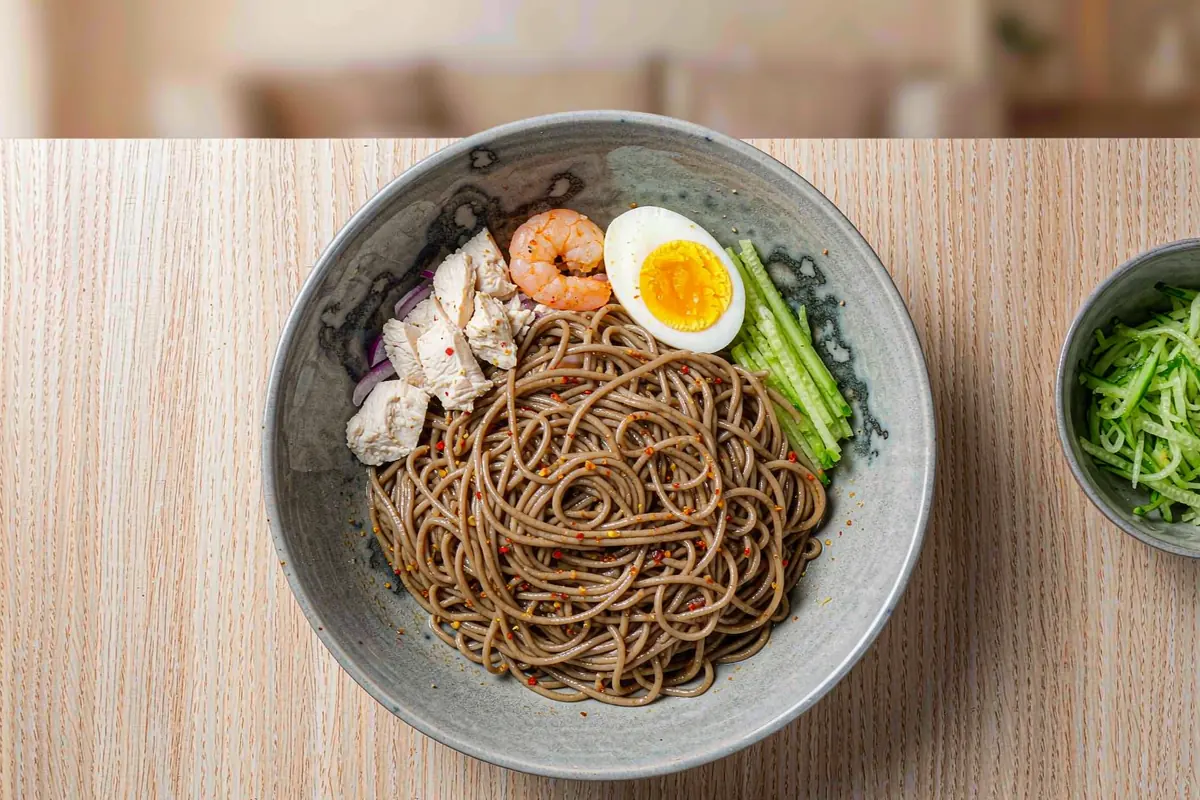
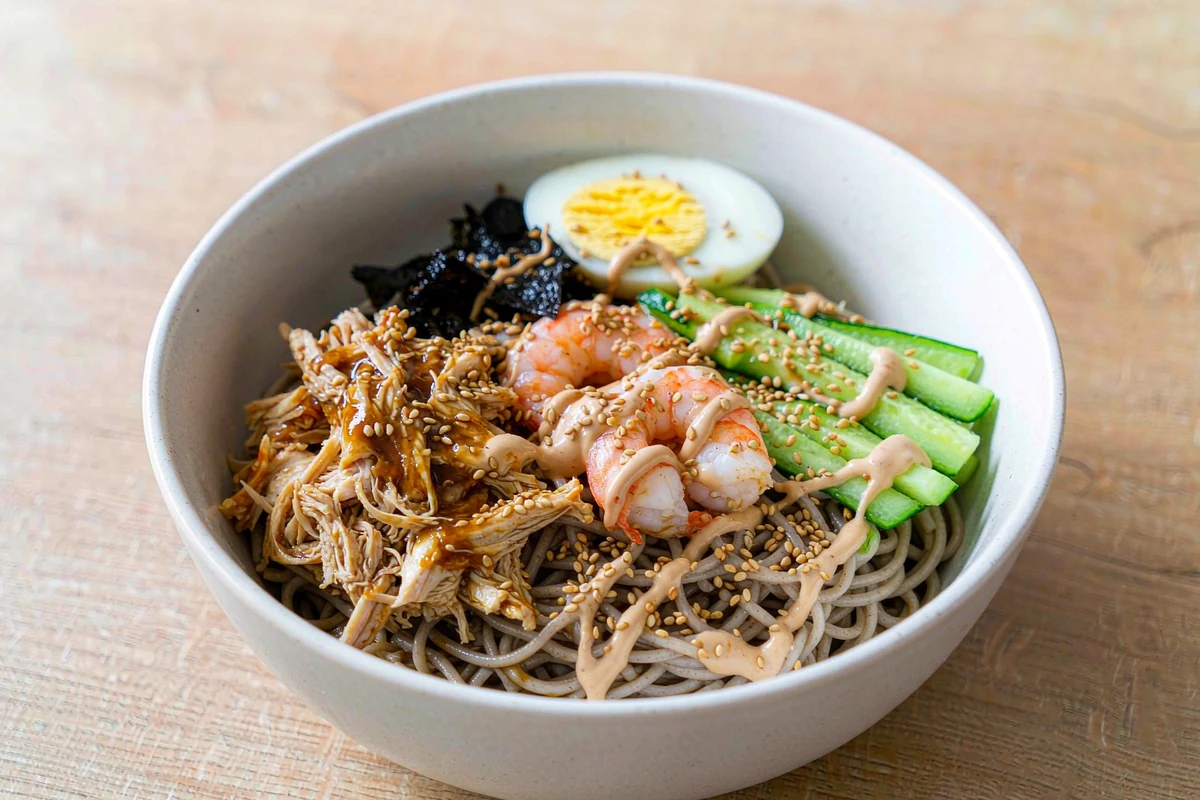
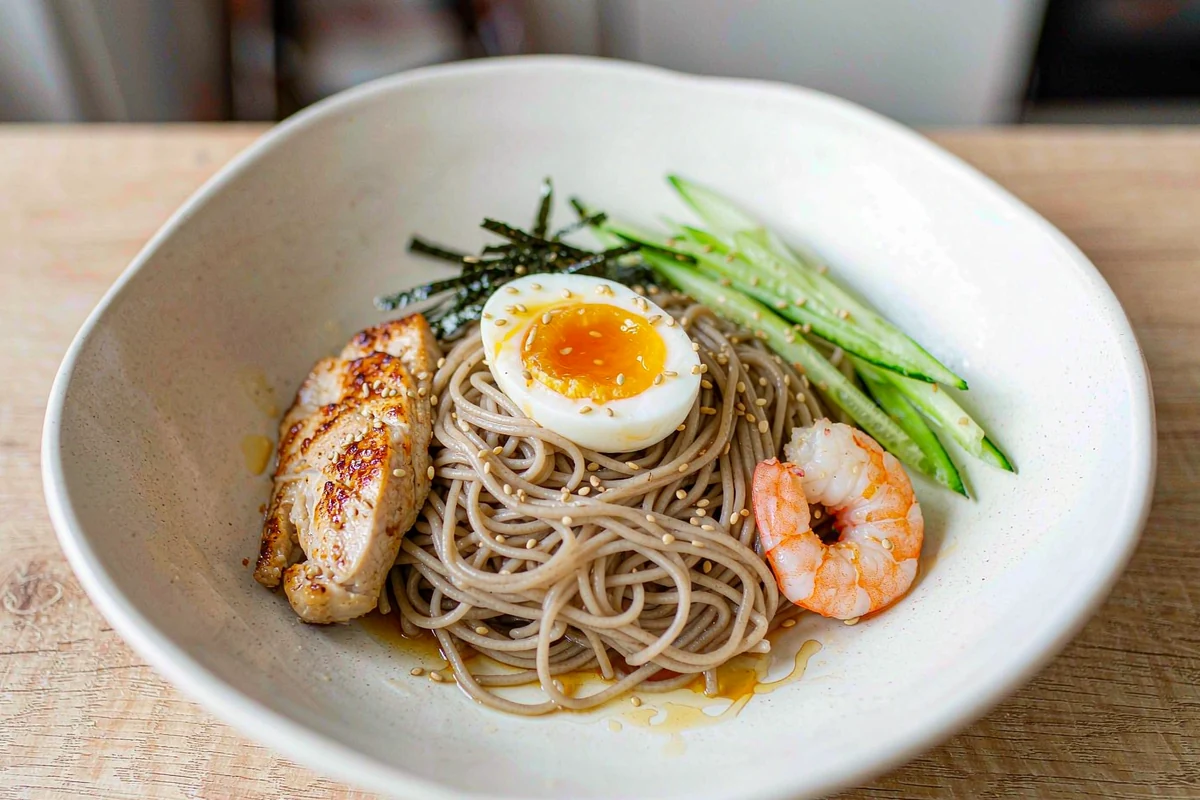
Chilled whole-grain buckwheat soba topped with pan-seared chicken breast, poached shrimp, jammy soft-boiled egg, crisp cucumber ribbons, toasted nori and sesame. Drizzled with our signature umami soy dressing — refreshing, low-GI, and under 420 calories. The perfect Asian-inspired summer lunch. We built it for the days you want real food fast: prep on Sunday, grab from the fridge, and eat it cold at your desk or within 30 minutes of training.
34g protein
415 kcal
Macro-dense, not calorie-dense — real fuel, not filler.
10 min
to assemble
Cook once, eat it cold for up to 3 days — built for meal prep.
Low-GI
buckwheat
Sustained energy, no afternoon crash — steadier than wheat pasta.
Every bowl starts with premium 100% buckwheat soba, chilled to perfection. We layer lean proteins and fresh vegetables, then finish with our house-made umami dressing — no heavy oils, no deep frying.
From our kitchen
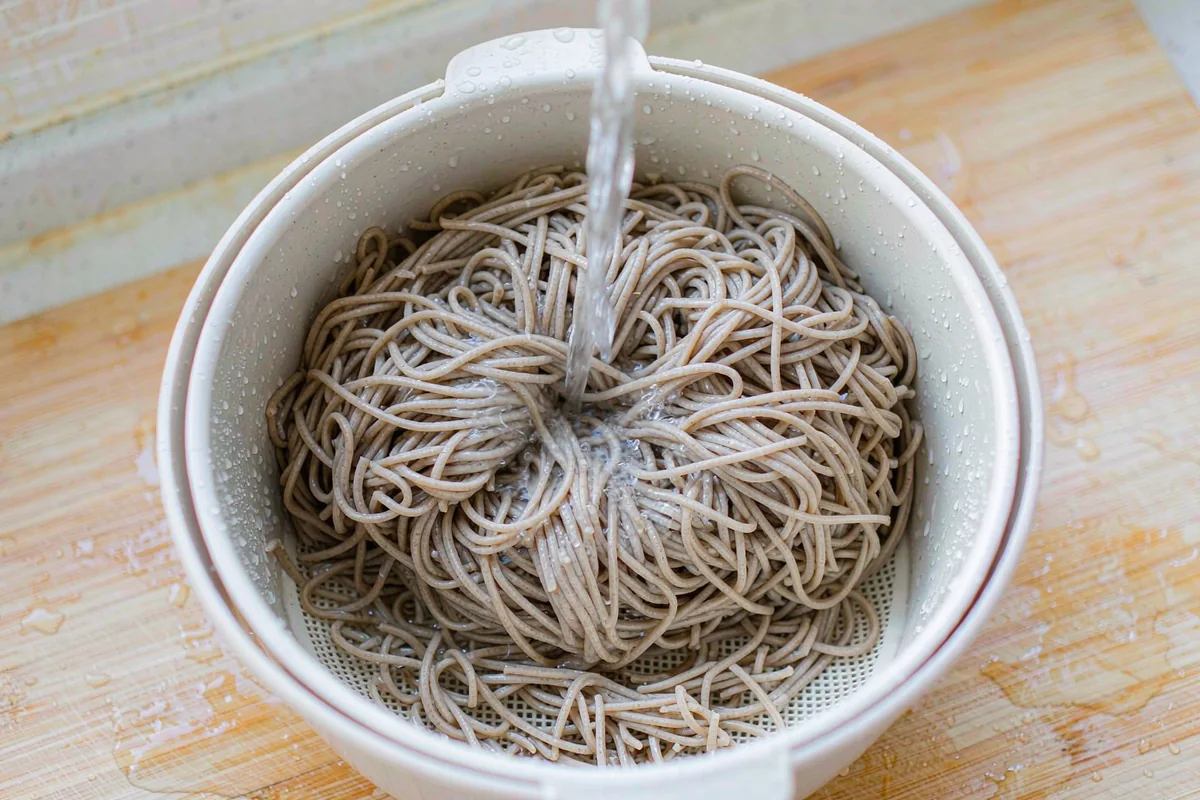
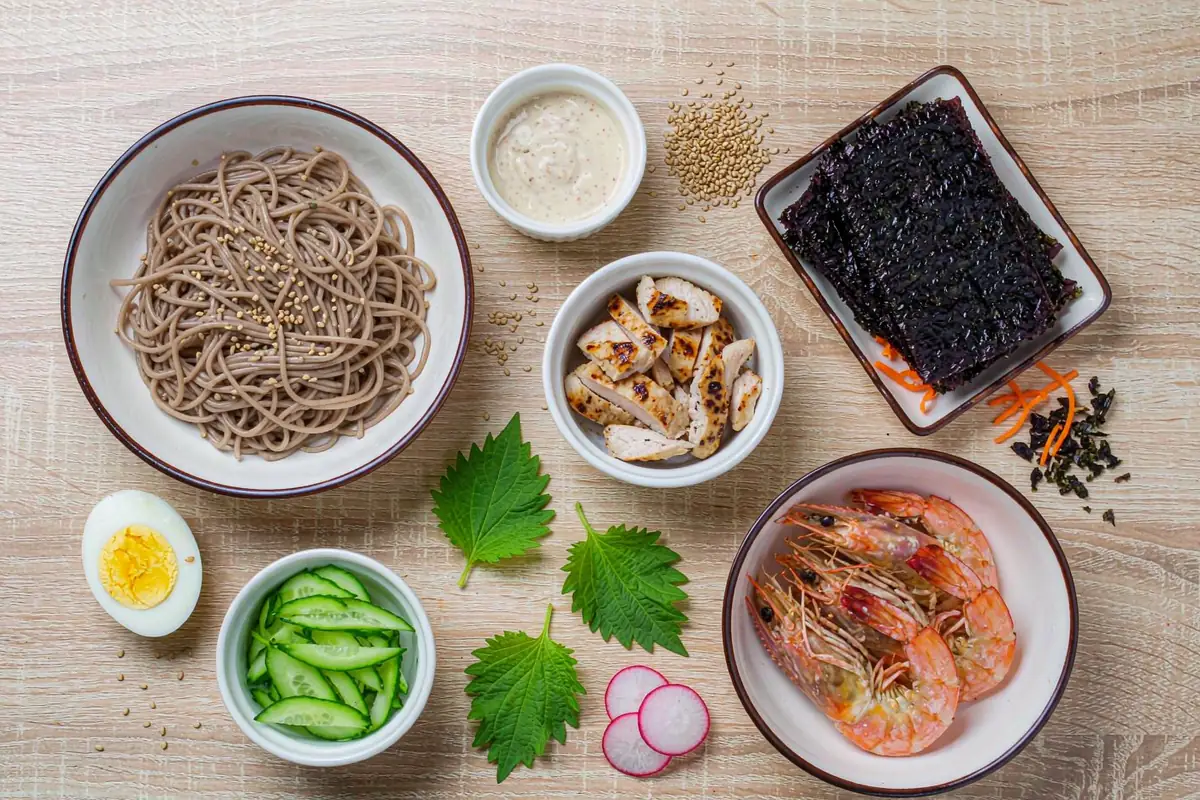
Boil the buckwheat noodles, rinse in ice water until springy, then chill to set.
STEP 01
Cook & Chill Soba
Premium 100% buckwheat soba is boiled al dente, rinsed under ice water until silky, then chilled to lock in that signature springy texture.
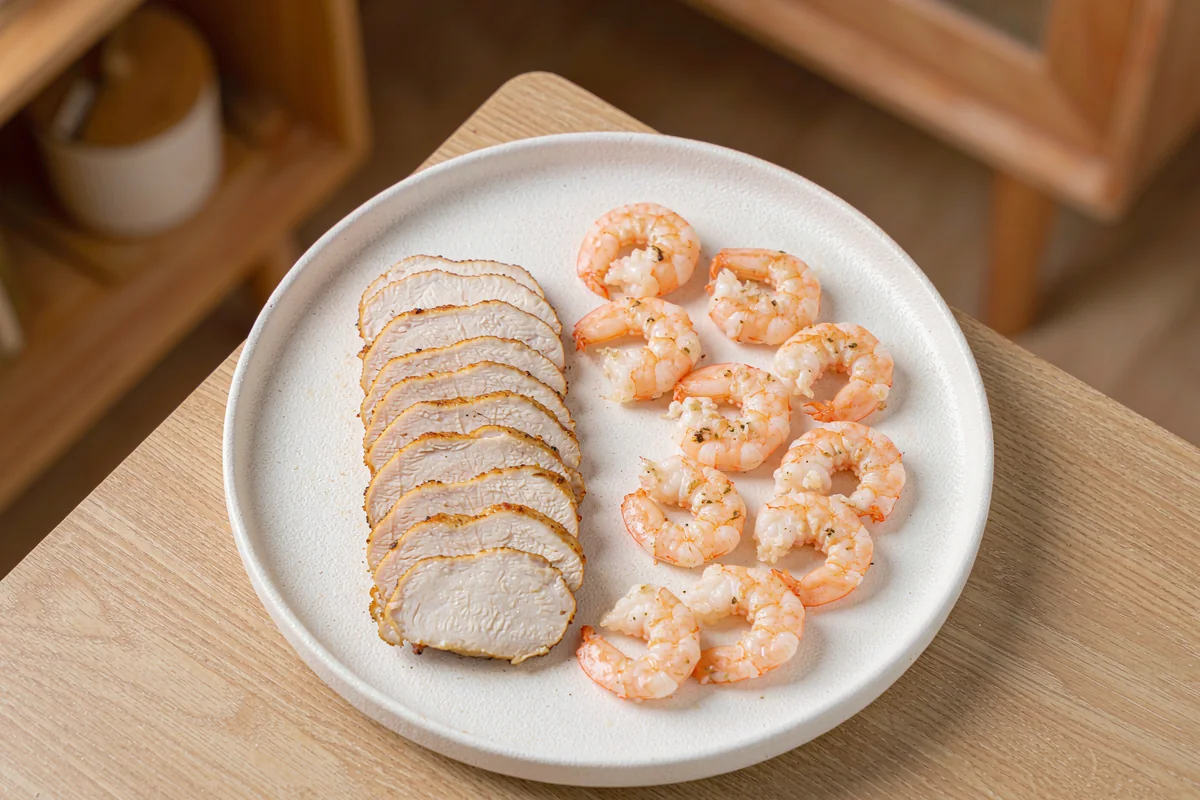
Sear the chicken breast and slice it thin; poach the shrimp briefly. Nothing is battered or deep-fried.
STEP 02
Prepare Proteins
Chicken breast is lightly seared and sliced; shrimp are quick-poached until pink. Both are kept lean — no batter, no deep fry.
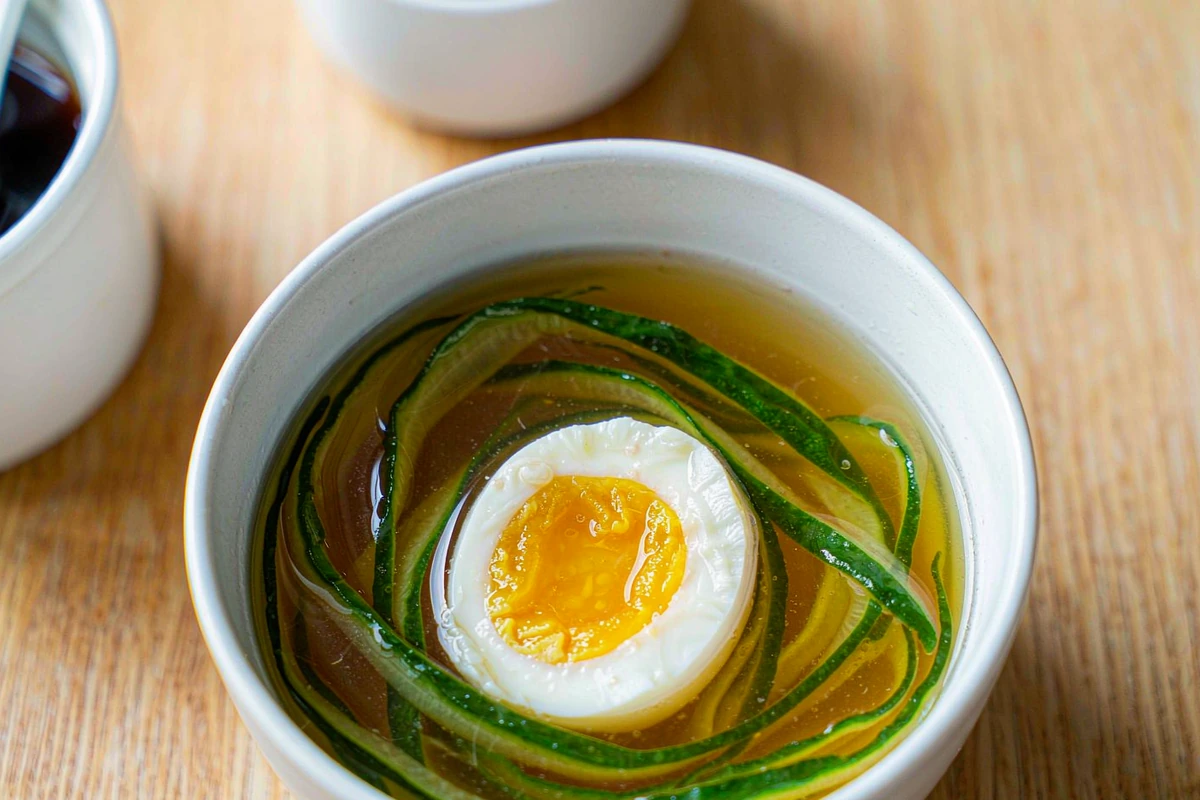
Halve the 6.5-minute soft-boiled egg to show the runny yolk; shave the cucumber into crisp ribbons.
STEP 03
Jammy Egg & Veg
A 6.5-minute soft-boiled egg gives a golden, custardy yolk. Cucumber is shaved into thin ribbons for maximum crunch and freshness.
Lay the noodles down first, arrange the toppings, scatter nori and toasted sesame, then finish with umami soy.
STEP 04
Assemble & Dress
Chilled soba as the base, artfully arrange toppings, add nori sheets and toasted sesame, then drizzle our signature umami soy dressing.
Pro tip: cook a double batch of soba and proteins on Sunday. Store the components separately, assemble each bowl with fresh cucumber and dressing in the morning — it stays crisp for up to 3 days.
GALLERY
Close-Up & Lifestyle
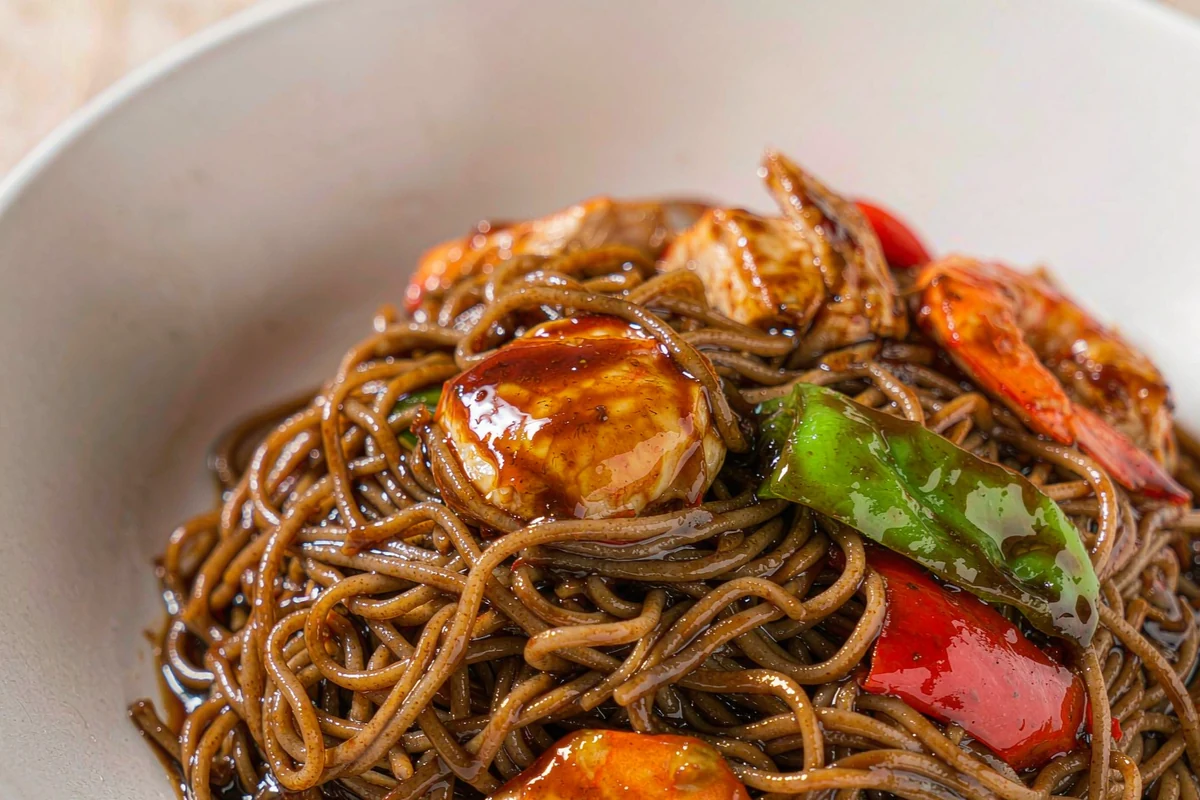
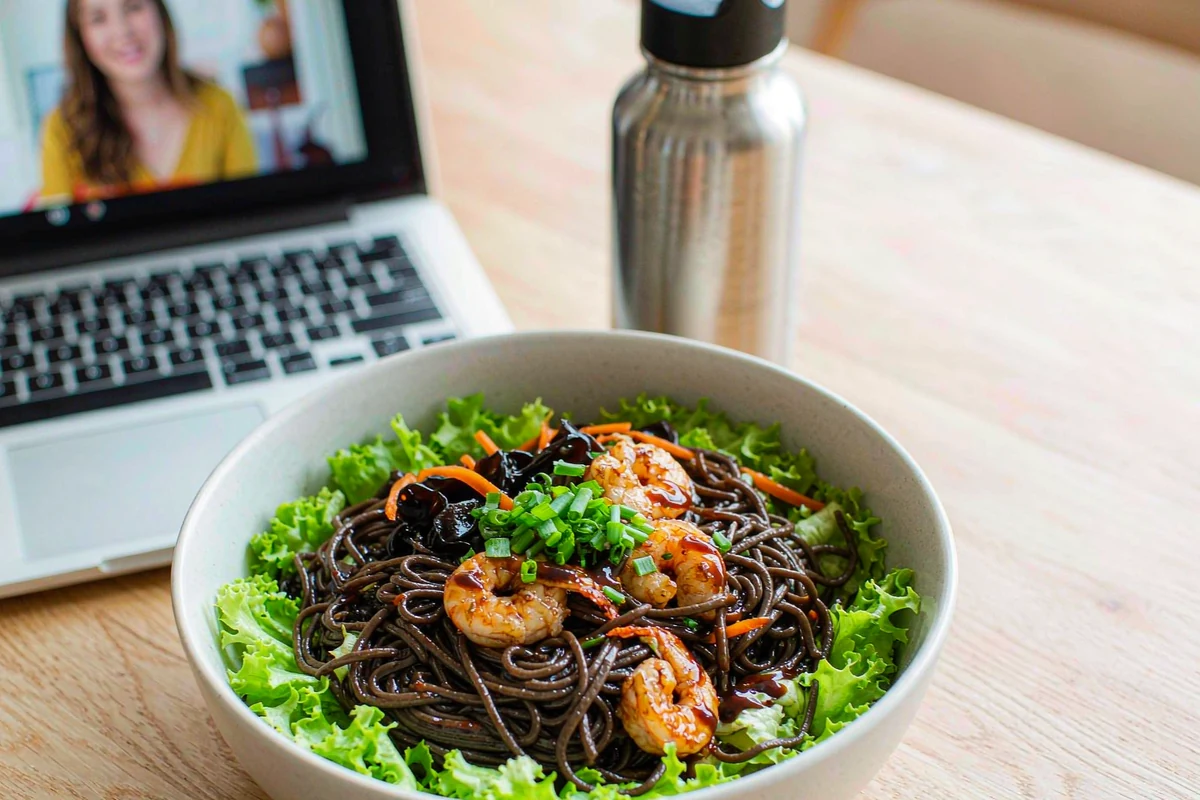
Every detail crafted for flavour and visual appeal — from the glistening sauce to the fresh ingredient spread.
Soba vs. The Usual Lunch
Why a cold soba bowl beats the desk salad and the meal-deal sandwich
Per serving
Soba Bowl
Caesar Salad
Sandwich Meal
Protein
34g
10–15g
20–25g
Calories
415
350–500
500–700
Fiber
5g
3g
2–3g
Prep time
10 min
5 min
5 min
Keeps you full
4–5h
2–3h
3–4h
Same ten minutes as a sandwich, double the protein, and it holds up cold — no sad soggy bread by 2pm.
LW
Chef's Note — Liang Wei, Culinary Director
Oriental Bite Test Kitchen · culinary specialist
Cold noodles that hold up
Buckwheat soba has more protein and fiber than wheat noodles, and it's built for the fridge — cold, dressed light, and still satisfying at lunchtime.
I make a bowl on hot days when cooking is out of the question. Ten minutes, real food, no crash.
When to Enjoy
A dish built for the moments your body asks for clean fuel
Weekend Brunch
Comfort food that still fits a light day.
Meal-Prep Lunch
Make a batch, freeze uncooked, cook as needed.
Light Dinner
Filling enough to satisfy, light enough to sleep.
How to Enjoy & Store
How to serve it, how to keep it, and who it suits best
How to serve
Reheat gently — by steam, in a pan, or in the microwave for 60–90 seconds with a splash of water. Add the dressing or sauce after heating so nothing turns soggy.
Storage
Refrigerate and eat within 24–48 hours. For longer storage, freeze portions uncooked and cook them straight from frozen — do not refreeze once cooked.
Who it's for
Built for high-protein, calorie-aware eating: office lunches, post-workout meals, and anyone keeping an eye on carbs without eating bland food.
Pair It Perfectly
Round out the bowl with our sauces, a plan, and the philosophy behind it
Every ingredient here is chosen for its xing wei — its nature and flavour — and for what Chinese food therapy has traditionally used it for.
Buckwheat Buckwheat
Cool · Sweet
Traditionally used to clear heat and support digestion — the grain of the mountain north.
Ginger Ginger
Warm · Pungent
Traditionally used to warm the middle, disperse cold and settle the stomach.
Nori Nori
Cool · Salty
Traditionally used to soften and to clear mild heat — the sea mineral of the Chinese coast.
Sesame Sesame
Neutral · Sweet
Traditionally used to nourish the liver and kidneys.
Nature, flavour and traditional use follow classic Chinese food-therapy references (traditional materia dietetica). This is food, not medicine — we describe how an ingredient is traditionally used, and make no claim to treat or cure anything.
KUNG FU PRINCIPLE
Cooling food, warm practice. Buckwheat is the mountain grain — it clears heat and keeps its bite.
How many calories are in the Low-Fat Soba Cold Noodle?
Each serving is about 415 kcal with 34g of protein, 52g of carbs and 8g of fat.
Can I freeze the Low-Fat Soba Cold Noodle?
Freeze them uncooked on a tray, then bag up; cook straight from frozen. Never refreeze after cooking.
Is the Low-Fat Soba Cold Noodle good for lighter living?
Yes. At about 415 kcal with 34g of protein and 5g fiber, it's highly satiating and keeps most people full for 4–5 hours.
Are the Low-Fat Soba Cold Noodle deep-fried?
No. They're steamed or pan-seared with a little oil — all the comfort, a fraction of the fat.
Can I meal prep the Low-Fat Soba Cold Noodle?
Yes. Cook the soba and proteins ahead, store the components separately, and dress just before eating. It stays fresh for 3 days refrigerated and tastes best cold.
Is soba healthier than pasta for weight loss?
Buckwheat soba has more fiber and protein than wheat pasta per serving, and a lower glycemic impact. That means steadier energy and better hunger control, which helps most people stay in a deficit.
 Summer Special